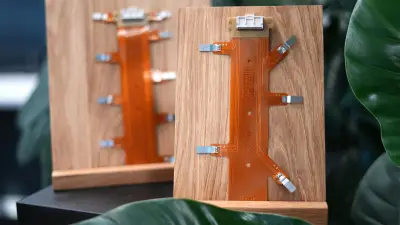
Useful FAQ guide about flexible printed circuit boards
The most frequently asked questions about flex PCBs
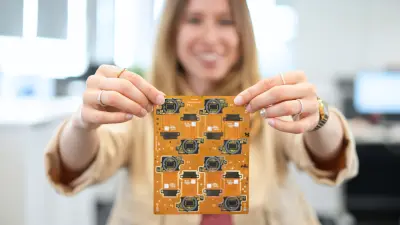
For purchasing and engineering professionals who navigate the complexities of modern electronics, the strategic application of Flexible Printed Circuit Boards (FPCBs) is increasingly important. This detailed FAQ guide provides an in-depth technical resource for individuals seeking precise information on FPCB specifications, design considerations, and manufacturing protocols.
Our aim is to equip you with the knowledge necessary to optimize your next-generation designs, ensuring performance, reliability, and cost-effectiveness. As a trusted partner in advanced PCB procurement, Bosch copperdot is committed to delivering solutions that meet the stringent demands of innovative applications across diverse industries.
Explore the technical insights within to enhance your flex PCB projects in the FAQ guide below.
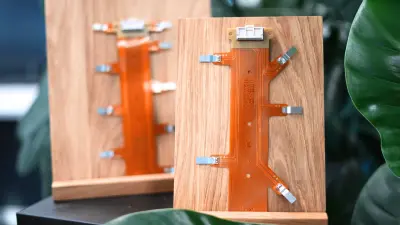
Technical and material specifications
This section addresses fundamental inquiries regarding the material composition and technical parameters of flexible PCBs. Understanding these specifications is crucial for ensuring optimal performance and compatibility with your application requirements.
What are the standard base materials you use for flexible PCBs?
Our primary base material for flexible circuits is Polyimide (PI) due to its exceptional thermal stability, robust mechanical properties, and high dielectric strength. For applications where cost is a primary driver and environmental demands are less stringent, we also offer Polyester (PET). We source materials only from qualified suppliers – some of the top global manufacturers – to ensure consistent performance and long-term reliability for your end-product.
What is the difference between a flexible PCB and a rigid-flex PCB?
A flexible PCB is a circuit board that can be bent or folded, allowing it to fit into compact or unconventionally shaped devices. A rigid-flex PCB is a hybrid construction that combines rigid sections (typically FR-4) with flexible sections in a single, integrated unit. This eliminates the need for connectors and cables between rigid boards, which significantly enhances reliability by removing potential points of failure. This is a critical consideration for our customers in industries such as the automotive, medical, or industrial sectors where failure is not an option.
For information on rigid-flex PCBs, please visit our portfolio page.
When should I use a stiffener in my flexible PCB design?
Stiffeners, typically made of FR-4 or Polyimide, should be incorporated for several strategic reasons. They provide mechanical support under components, particularly connectors, to protect solder joints from stress during mating and unmating cycles. They also help flatten specific areas for automated assembly (SMT) and can serve as a designated bend constraint. For our customers, this means improved manufacturability, higher assembly yields, and a more durable final product.
What types of stiffeners do you offer?
We offer a range of stiffener options to meet diverse design requirements. The most common are FR-4 for rigid support under components and Polyimide (PI) for localized thickness increases while maintaining a degree of flexibility. For specialized applications, we can also incorporate stainless steel or aluminum stiffeners for enhanced rigidity and thermal management.
What is your minimum trace width and spacing capability?
Our advanced manufacturing facilities routinely produce flexible circuits with trace widths and spacing down to 75µm / 75µm (3/3 mil). For high-density applications, our engineering team can consult with your designers to explore even finer feature capabilities. This precision enables the miniaturization and increased functionality that OEMs and ODMs require to lead in the markets.
What surface finishes are available for your flexible circuits?
We provide a comprehensive suite of surface finishes to ensure optimal performance and compliance. Our standard offerings include Electroless Nickel Immersion Gold (ENIG) for excellent solderability and shelf life, Electroless Nickel Electroless Palladium Immersion Gold (ENEPIG) for gold wire bonding applications, and Organic Solderability Preservative (OSP) as a cost-effective, lead-free option. We consult with your team to select the finish that provides the best balance of cost, performance, and reliability for your specific application.
What are the advantages of using a polyimide base for flex circuits?
Polyimide is the material of choice for high-reliability applications due to its superior performance profile. Its key advantages include:
- High-temperature stability: it withstands lead-free soldering temperatures without degradation.
- Excellent mechanical durability: polyimid endures thousands of dynamic flex cycles.
- Chemical resistance: it is resistant to a wide range of industrial chemicals.
- Dimensional stability: the polyimide material maintains its shape and electrical properties across a wide temperature range, ensuring predictable performance for the life of the product.
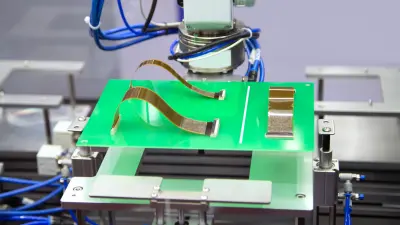
Design and manufacturing
Effective flex PCB design requires an understanding of specific considerations to prevent common errors and maximize circuit longevity. In this section of our FAQ, you’ll find details about critical design principles, manufacturing capabilities, and Bosch’s quality assurance methodologies.
What are the most common design mistakes to avoid with flexible PCBs?
From decades of Bosch’s experience, we could see that the most critical design areas to focus on are:
- Bend radius: designing a bend radius that is too tight is the most common cause of failure. We recommend a minimum bend radius of 10x the circuit thickness for dynamic applications.
- Transitions: abrupt transitions from wide to narrow traces create stress points. Gradual, tear-dropped transitions are essential.
- Component placement: placing components in or near a bend zone will compromise solder joint reliability.
Our engineering team engages early in the design phase to help you avoid these pitfalls, reducing development cycles and total cost of ownership.
What is a DFM (Design for Manufacturability) analysis, and do you provide it?
Yes, a DFM check is a standard and critical part of our client onboarding process. Our engineers analyze your Gerber files to identify any design features that could compromise yield, reliability, or cost-effectiveness during mass production. This collaborative review ensures your design is optimized for our manufacturing processes, leading to higher quality, lower costs, and faster time-to-market.
Read here more about DFM.
What is the ideal bend radius I should design for?
The ideal bend radius depends on the application. As a generic rule you can take:
- Static (flex-to-install): a minimum of 3-6x the circuit thickness.
- Dynamic (repeated flexing): a minimum of 10-20x the circuit thickness.
We strongly advise consulting with our technical team, who can provide precise recommendations based on your material stack-up and intended use case. Contact us directly via our contact form.
Can you manufacture flexible PCBs with controlled impedance?
Absolutely. We specialize in manufacturing flexible circuits with controlled impedance for high-speed digital and RF applications. Our process control and advanced modeling software ensure we can consistently meet tight impedance tolerances (typically ±10% or better), guaranteeing the signal integrity your product demands.
What are your quality and inspection standards?
Quality is the cornerstone of Bosch’s guideline “Invented for Life”. Our facilities are certified to the highest industry standards, including ISO 9001, IATF 16949 for automotive partners, and ISO 13485 for medical devices. All our flexible circuits are manufactured and inspected to IPC-A-600 and IPC-6013 Class 2 or Class 3 standards, depending on your application's requirements. We utilize Automated Optical Inspection (AOI), Visual inspection, and electrical testing on 100% of our boards to ensure zero-defect delivery. Many other specialized test and reports are available, based on specific requirements and needs.

Ordering and process
Streamlined procurement is essential for efficient project timelines. This section outlines the process for obtaining quotations (RFQs), accepted data formats, typical lead times, and our flexible approach to order quantities, designed to support from sample to mass-serial production.
How do I get a quote for my flexible PCB design?
Simply contact our sales engineering team or use the secure portal on our website to upload your design files. To provide a comprehensive quote, we require your Gerber files, a fabrication drawing, quantity, and desired lead time. A member of our team will promptly follow up to discuss your project in detail.
Follow this link to our contact form and send your RFQ right away!
What file formats do you accept?
We accept all industry-standard formats. For fabrication, Gerber (RS-274X) is preferred, accompanied by an Excellon drill file. We also accept ODB++ for a more integrated data package.
What is your standard lead time for production runs?
Lead times are project-dependent and production lead times vary based on volume and complexity but are established and agreed upon at the start of our engagement to ensure alignment with your project timeline. We pride ourselves on predictable and reliable delivery schedules.
Do you have a Minimum Order Quantity (MOQ)?
We are structured to support your entire product lifecycle, from sample production to mass-series production. We do not have a prohibitive MOQ, as we believe in building long-term partnerships that begin at the earliest stages of innovation.
What information do I need to provide to get an accurate quote?
For the most accurate and timely quote, please provide the following:
- Gerber or ODB++ files
- A detailed fabrication drawing (specifying materials, stack-up, and special requirements)
- Quantities (for both prototype and production)
- Required lead time
- Any applicable compliance requirements (e.g., IPC Class 3)
Optimizing your flex PCB implementation with Bosch
This comprehensive FAQ has provided a detailed overview of the technical and practical considerations essential for successful flexible printed circuit board integration. From material properties and design-for-manufacturability principles to our rigorous quality assurance processes and efficient ordering procedures, we’re dedicated to supporting your advanced electronic projects. Our expertise, combined with adherence to international standards, ensures the delivery of high-performance, reliable FPCBs. We invite you to leverage Bosch copperdot's capabilities to transform your complex design requirements into robust, field-ready solutions.