Understanding IPC Classes in bare PCB design
All information about IPC class 1, 2, and 3

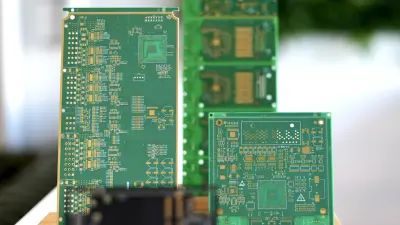
IPC classes define how robust, reliable, and clean a bare Printed Circuit Board (PCB) must be for its intended use, from simple consumer gadgets up to safety-critical automotive or industrial applications. IPC standards turn vague quality expectations into measurable criteria that designers, purchasers, and manufacturers in an OEM, ODM, or EMS can all rely on.
What is IPC and what is an IPC class?
IPC (formerly “Institute for Printed Circuits” and today "Association Connecting Electronics Industries“) is the globally recognized industry standards and specifications for the design, manufacturing, and testing of electronic equipment. Their standards are widely adopted across automotive, industrial, medical, aerospace, consumer electronics, and other industries, and they are the conventional language between OEMs and bare board manufacturers.
An IPC class is a guideline pointing to the quality and reliability category defined within key IPC standards. It tells you how many cosmetic and functional imperfections are acceptable, what dimensional tolerances apply, and how much stress the bare PCB must withstand over its lifetime. IPC standards define generally, how to build the bare PCB, how it should look when manufactured, and how it should perform after it is put into operation.
In practical terms, IPC classes 1, 2, and 3 are:
- Class 1 – General electronic products: simple, low-cost bare boards where occasional failures are tolerable (e.g., for toys, simple gadgets).C
- lass 2 – Dedicated service products: workhorse bare boards that need good reliability but do not operate in life-critical conditions (e.g., for industrial controls, IT, consumer or commercial products).
- Class 3 – High reliability products: mission-critical and safety-relevant bare boards where downtime is unacceptable, and the environment can be harsh (e.g., for automotive safety, aerospace, medical, or defense).
Bosch’s own products in automotive and other demanding industries are typically engineered to high IPC classes (Class 2 and especially Class 3 in safety-critical contexts), reflecting a longstanding focus on reliability and robustness of the bare board.
IPC Class 1, 2, and 3 in simple terms
A useful way to think about the classes is “how bad is it if this bare board fails?” and “how tough is the environment?”
- IPC Class 1 – “Good enough” for simple bare boards
- Shorter expected lifetime, more cosmetic and minor structural defects are allowed.
- Suitable for low-cost consumer electronics where a failure is inconvenient but not dangerous (e.g., for toys or simple flashlights).
- IPC Class 2 – Reliable daily-use bare boards
- Stricter limits on defects; bare boards must be robust over a normal product lifetime, but not necessarily under extreme conditions.
- Typical for bare boards in industrial control units, laptops, white goods, networking equipment, and many B2B electronics.
- IPC Class 3 – High-reliability, no-downtime bare board systems
- Highest requirements on materials, processes, inspection, and test; minimal or no cosmetic defects tolerated if they could hint at structural weakness.
- Used for bare boards in automotive safety systems, aerospace avionics, medical life-support, military and other “must-not-fail” applications in harsh environments.
Choosing a higher class increases bare board manufacturing effort and cost but dramatically reduces the risk of field failures and costly recalls, which is why established OEMs like Bosch must favor high IPC classes for safety-relevant and long-lifetime products.
Design rules: how IPC classes change your bare PCB design
Different IPC classes translate into different design rules and acceptance criteria for the bare PCB. For engineers, this has a direct impact on layout constraints, stackup and materials choices, as well as margin assumptions.
Key areas that tighten from Class 1 to Class 3:
- Conductor widths and spacings
- Minimum trace width and clearance can be similar across classes, but the allowable variation and defect tolerance becomes stricter for Class 3, e.g., less underetch, tighter control of conductor thickness and uniformity.
- For high-current or safety-relevant nets (e.g., powertrain, battery systems etc.), Class 3 designs often include larger copper widths and more clearance to handle thermal and electrical stress with margin.
- Plated through holes (PTH) and vias
- Class 3 requires thicker and more uniform barrel plating, tighter control of annular rings, and no cracks or voids that could affect long-term reliability under vibration and temperature cycling.
- Via aspect ratio limits are effectively tighter in practice; very deep, narrow vias are carefully engineered or replaced with stacked/microvias in HDI (High-Density-Interconnect) structures, especially in mobility, communication, and industrial designs.
- Solder mask and surface finish
- For Class 3, solder mask registration, coverage, and thickness must be carefully controlled to prevent creep corrosion, dendritic growth, or other issues in harsh environments.
- Surface finishes are chosen for long-term reliability (e.g., ENIG, ENEPIG) rather than purely for cost, particularly where fine pitch requirements and repeated thermal cycles are expected for the bare board.
- Controlled impedance and high-speed routing
- Higher classes demand tighter impedance tolerances, via stubs control, return path integrity, and skew management for high-speed interfaces on the bare board.
- Documentation and modeling expectations increase: stackups are defined more precisely, and test structures for impedance are often required.
- Dimensional tolerances and warp/twist
- Stricter control over the overall dimensions, hole locations, and board flatness (warp and twist) is required for higher classes, ensuring compatibility with tight component placement and subsequent manufacturing processes.
- Material selection and dielectric properties
- For Class 3, the selection of base laminate materials (e.g., FR4 variants, low-loss laminates) becomes more critical. Properties like dielectric constant (Dk), dissipation factor (Df), and thermal reliability (Tg, Td) must be tightly controlled and verified to ensure signal integrity and long-term performance, especially for demanding applications.
- Cleanliness requirements
- Bare boards destined for Class 2 and especially Class 3 applications have more stringent cleanliness requirements to prevent contamination that could lead to electrical leakage or corrosion over time. This includes ionic cleanliness and particulate matter.
For B2B customers, the practical takeaway is that moving from Class 2 to Class 3 means earlier and closer collaboration between your design team and your bare PCB partner on design rules and stackup, especially where space is tight and reliability targets are ambitious.
With copperdot, you can leverage Bosch’s internal design and manufacturing knowhow to translate your functional and lifetime requirements into pragmatic Class 2 or Class 3 bare board design rules – without having to be an IPC expert yourself.
Recent directions in IPC standards and what they mean
In recent years, IPC has continued to refine and update key PCB-related standards, including revisions to core documents such as IPC-2221 (generic bare PCB design), IPC-6012 (rigid bare PCBs), and IPC-A-600 (acceptability for bare boards). These updates reflect:
- Growing use of HDI, microvias, and advanced laminates in high-speed and high-density products.
- Insulated Metal Substrate (IMS) PCBs
- Stronger emphasis on long-term reliability, via integrity, and cleanliness as bare electronics move into harsher and more safety-critical environments.
- Alignment with emerging applications such as automotive Advanced Driver-Assistance Systems (ADAS), industrial automation, and connected devices that increasingly demand robust bare board foundations.
For B2B product teams, the implication is clear: IPC classes are not static; the bar for what “Class 2” and “Class 3” mean in practice evolves alongside technology and regulatory expectations. Partnering with a provider that actively tracks and implements current IPC revisions is key to staying compliant and competitive.
copperdot builds on decades of Bosch experience in applying high IPC classes in automotive, industrial, and medical products, combining this with modern bare PCB procurement, design support, and supply chain reliability. That makes copperdot a strong service partner whether you are planning a new sensor, an industrial controller, or a safety-relevant automotive ECU.
Why copperdot by Bosch is the right partner for IPC-compliant bare PCBs
For many companies, the challenge is not knowing that IPC classes exist – it is knowing how to choose and implement them correctly. copperdot helps you:
- Translate business and regulatory requirements into appropriate IPC classes for bare boards.
- Apply the right bare board design rules for Class 1, 2, or 3, including HDI and high-speed specific constraints, without over or under-engineering.
- Benefit from Bosch’s proven processes, supply chain quality, and high-reliability experience, especially for automotive and industrial applications.
If you are planning a new electronic product – whether it is a connected industrial device, an automotive control unit, or an edge system – our team helps you define the right IPC class strategy and turn it into a robust bare PCB solution.
To discuss your next project or clarify which IPC class best fits your application, get in touch with us today!